Commercial Waste Removal in Knightsbridge
Commercial waste removal in Knightsbridge needs to be tidy, reliable and arranged around the realities of busy premises. We handle general business waste collection for offices, shops, hospitality venues and managed properties, helping keep day-to-day operations clear of unwanted rubbish. The service is built around practical loading, responsible transfer and the separation of recyclable material where it is suitable to do so, so businesses can keep their spaces usable without unnecessary disruption.
Our work can include routine collections for mixed commercial waste, removal of bulky items from trading floors and clearance of stored materials that have built up over time. We also support businesses that need a one-off clearance before a refit, a move or a change of use. If you are comparing options, clarity on what is being removed is the best starting point, because the right arrangement depends on volume, access and the type of waste involved.
A straightforward enquiry is usually enough to begin. If you already know roughly what needs taking away, note the type of material and the access to the premises, then request a quotation when you are ready. If you need a little more detail first, use the pages on our service range to understand the options and choose the most suitable next step.
Business waste collections for shops, offices and managed premises
We provide commercial waste collections for premises that produce regular or occasional rubbish from trading, administration and customer-facing activity. That can include packaging, paper, display waste, broken fittings, small dismantled items and other non-hazardous business refuse. The aim is to keep collections orderly and make the disposal route clear, rather than leaving you to manage accumulated bags and loose materials on site.
For recurring waste, the main decision is usually the balance between frequency and volume. Some sites generate a consistent stream of lightweight material, while others need occasional larger clearances after stock changes or maintenance work. Our approach is to match the removal to the actual load, so you are not booking more than is needed. If your waste stream includes segregated material, it may help to separate what can be recycled before collection.
Useful planning points include:
- the type of waste you want removed
- how much space the items occupy
- whether there is lift or stair access
- any restrictions on loading times or vehicle access
- if items must be carried from storage, cellar or upper floors
Clearance for bulky items and internal fit-outs
Some commercial clearances are less about everyday rubbish and more about larger items that have reached the end of their use. We remove bulky furniture, shelving, counters, storage units and other redundant contents that can slow down a redesign or leave a workspace cluttered. Where a business is refreshing its interior, the clearance stage often needs to be handled before decorators, installers or other trades can work efficiently.
The advantage of a planned clearance is that items can be lifted in a sensible order, with attention to what should be removed first and what needs to remain until the last moment. That matters in occupied premises, where corridors, reception areas and stock rooms may still need to function while the work is underway. We keep the emphasis on practical removal rather than unnecessary disturbance, which helps the site stay manageable during the changeover.
Where appropriate, we can also support clearances linked to new layouts, seasonal changes or the end of a lease arrangement. If you are preparing for a fit-out, it can help to identify any fixtures that are staying, anything that needs dismantling and any items that require a little more care during loading. A clear list of the larger pieces often makes the quotation process simpler and more accurate.
Office waste removal and workspace tidying
Office waste removal is often about creating breathing room around desks, meeting rooms, storage cupboards and shared spaces. We remove redundant office furniture, surplus files, packaging, outgrown equipment and general office rubbish that no longer serves the business. The service is suitable for one-off office clearances as well as periodic removal of build-up that collects in back areas, storerooms and underused rooms.
Commercial offices commonly need a careful approach because not every item is simply rubbish. Some materials may contain confidential information, some may be destined for reuse or recycling, and some may need to be shifted without marking walls, doors or floors. That is why it helps to identify the categories in advance. If a workspace includes items such as paperwork, monitors, chairs or filing units, it is easier to plan the removal when those groups are described clearly.
When a quotation is requested, the most useful details are the approximate quantity, the floor level, the presence of lifts or stairs and whether the clearance is part of a larger office move. If you have questions about whether a particular item belongs within the job, it is better to raise them early than to leave them until collection day. Accuracy at the start keeps the work smoother for everyone involved.
Furniture disposal for business premises

Business furniture disposal covers items that are no longer needed because they are damaged, obsolete or being replaced. We deal with desks, chairs, cabinets, tables, shelving, reception furniture and other common office or commercial furnishings. The service is useful when items are too large for normal bins and too awkward to move without proper handling, particularly where furniture must be lifted through shared entrances or narrow internal routes.
Different items call for different handling. Light stackable chairs are not moved in the same way as heavy filing cabinets or reception units with fixed panels. We take account of the shape, weight and route out of the property, which helps reduce avoidable delays. Where furniture can be separated into components, it may be moved more efficiently after simple preparation, but the main task is always the safe and orderly removal of the load itself.
Clients often choose furniture disposal when they are replacing a single room or refreshing part of a building rather than carrying out a full clearance. In those cases, the job may be simpler than a complete strip-out, but the same basic factors still matter: what the items are, where they are located and how they can be reached. If that sounds like your situation, you can ask for a quotation once the items have been identified.
Recycling-led removal and waste sorting
Not all commercial waste should be treated as one mixed load. Where materials can be separated sensibly, we look to keep recyclable items apart from general refuse so the removal is handled in a more structured way. Typical business waste may include cardboard, paper, metal, plastics, wood and mixed items that need to be assessed before disposal. The key point is that sorting should be realistic for the job, not complicated for its own sake.
Recycling-led removal can be especially helpful when a business has packaging from deliveries, redundant display materials or dismantled units that contain more than one material type. A simple separation of items before collection can improve the efficiency of loading and make the overall clear-out easier to manage. We do not rely on guesswork: the collection should reflect the actual contents on site and the practical limitations of the premises.
Because commercial waste streams vary, it is sensible to mention anything unusual at the quotation stage. That might include mixed materials, items that are unusually heavy or waste stored in a basement, courtyard or upper floor. If the waste is straightforward, the arrangement is straightforward too. If it is mixed, a short description often gives enough information to plan the work properly.
About Knightsbridge
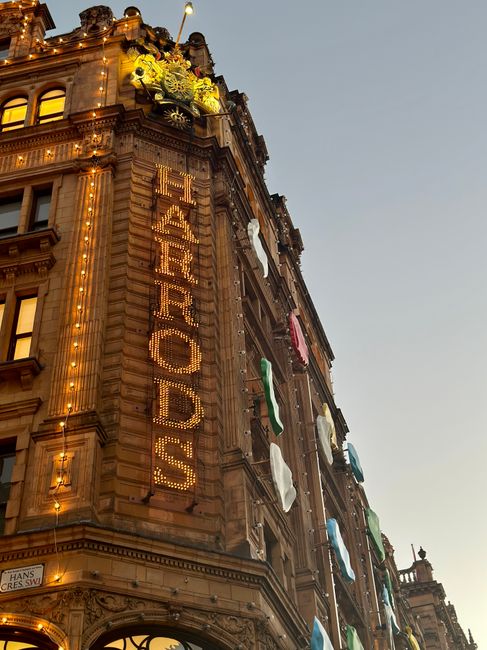
Knightsbridge is an affluent district in central London, lying partly within the Royal Borough of Kensington and Chelsea and partly within the City of Westminster. Its name has long been associated with the road junction on the western edge of Hyde Park, and the wider area is known for a tightly woven street pattern of terraces, mews streets and later commercial landmarks. The district developed significantly during the nineteenth century as London expanded westward, with grand residential squares, mansion blocks and embassies contributing to its character. Over time, parts of it became synonymous with high-end retail and hospitality, especially along Brompton Road and around Sloane Street, where luxury shops sit alongside hotels and restaurants. Hyde Park forms the area’s northern boundary in common usage, while nearby Belgravia and South Kensington help define its setting within central London’s broader urban fabric. Landmarks that shape the local landscape include Harrods, Harvey Nichols, the Hyde Park Barracks, the Royal Albert Hall at the eastern edge of the wider district, and the museums of South Kensington a little further south. Green space is an important part of the area’s identity, with Hyde Park and Kensington Gardens offering wide open landscape within a dense city centre. The architecture mixes surviving stucco-fronted houses, elegant commercial frontages and later redevelopment, creating a place where historic streets and modern retail activity sit very close together. Even with its polished reputation, Knightsbridge remains an everyday part of inner London life, supported by transport links, cultural venues and a continuous flow of residents, visitors and workers.
Commercial clearances for changing premises
Businesses often need waste removal at moments of change rather than on a fixed routine. That may be a relocation, a partial refurbishment, a stockroom reorganisation or the end of an occupied tenancy. We handle clearances that help free up space before the next stage of work begins, including removal of mixed office contents, old furniture and other unwanted material that has no further place in the premises. The goal is to leave the area ready for whatever follows.
These jobs are usually more successful when the order of removal is thought through in advance. Items that block access should go first, while fragile or fixed features should be protected and left untouched unless they are part of the agreed work. If a site contains both reusable and disposable items, it can help to identify that split before the job starts. That way, the removal can be aligned with how the premises are actually being used or emptied.
For many customers, this is the point at which a clear scope matters more than a broad idea of “getting rid of everythingâ€. If you want the work handled efficiently, it is helpful to state what stays, what goes and whether the job is a partial clearance or a full one. That gives a better basis for arranging a quotation and choosing the right collection size.
Booking details, access and quotation factors
When you request a quotation for commercial waste removal, a few practical details make the process easier to assess. The type of waste, the approximate amount and the access arrangements are often the most important. If there is basement access, a service lift, stairs, controlled entry or limited loading space, those points affect how the work is planned. A short written description is usually more useful than a vague label for the whole job.
It also helps to mention whether the waste is already gathered in one place or spread across several rooms. Collected loads are typically simpler to assess than loose material scattered through an occupied floor. If some items need dismantling before removal, that should be stated as well. The more accurately the site is described, the easier it is to match the collection to the work required, without padding the arrangement with unnecessary extras.
If you are gathering information before contacting us, keep it simple: what needs removing, where it is located, and whether there are any access restrictions. One concise list can be enough to move things forward. Once you are ready, request a quotation and use the contact page if you want the next step to be arranged promptly.
Responsible disposal and business waste decisions

Commercial waste removal is not only about taking items away; it is also about making sensible disposal decisions once they leave the premises. Some waste is suitable for recycling, some is better handled as general refuse and some items may require a more careful route because of their composition. We keep the process focused on lawful, practical handling and on separating obvious recyclable material where it can be done without complication.
For business customers, that means the service should fit the waste stream rather than forcing the waste into a single pattern. Office clearances, furniture disposal and mixed commercial rubbish all bring different considerations, so the removal method should reflect what is actually present. If you have items that you are unsure about, the best approach is to describe them clearly and let the collection be planned around those facts. That is more reliable than assuming every item belongs in the same category.
To move forward, you can review the relevant service page, note the main items and then request a quotation. If the job is straightforward, the next step may be very simple; if it is mixed or access is tight, a little extra description will help shape the right arrangement. Either way, the purpose is the same: a tidy, professional removal that clears the way for business to continue.